
- Certification
- Network Security
- Cybersecurity
Why CCNA, CCNP, AWS, Azure, and ISC2 Certifications Are Important for IT Professionals (Part 2).
By Pivithuru Milan Perera2 min read
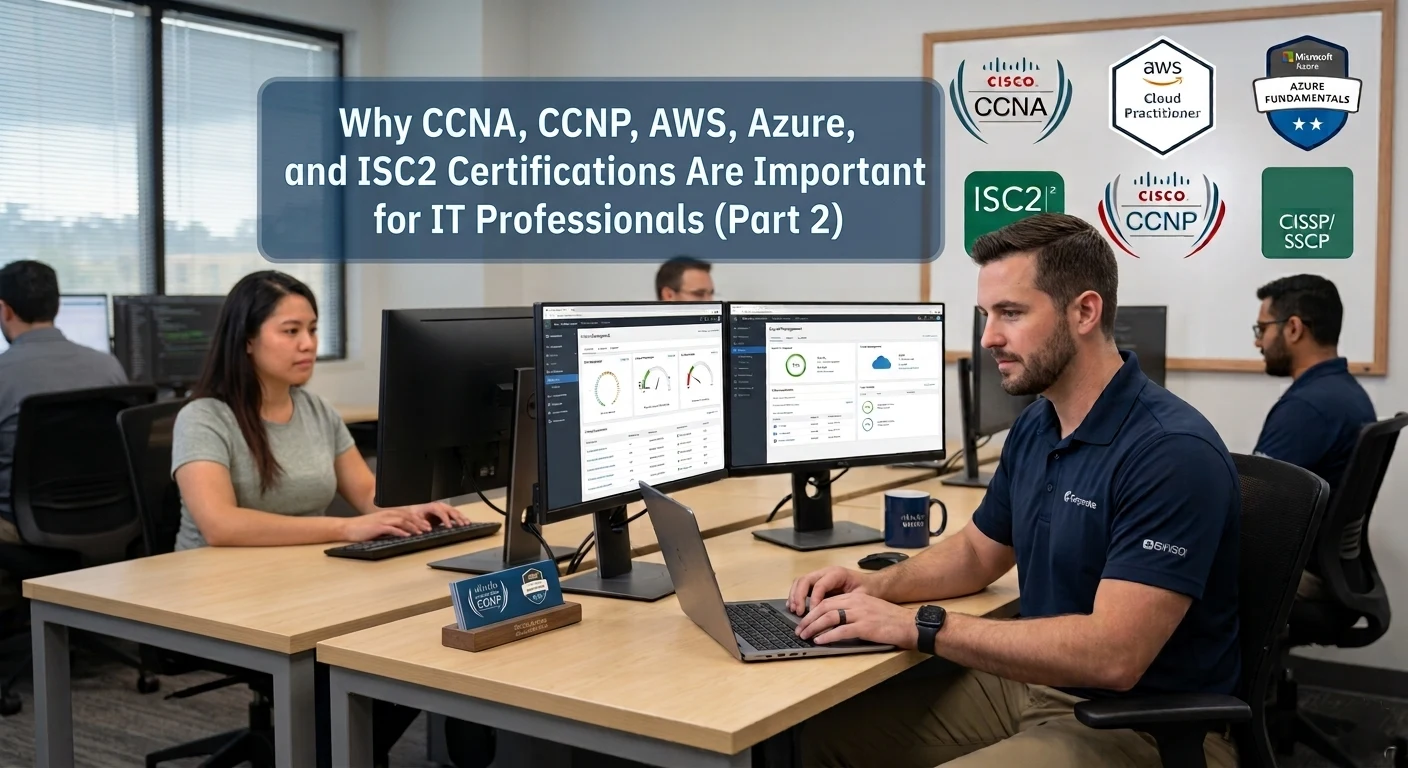
The Bigger Picture: Why Demand Keeps Climbing Across All Five
Looking at networking, cloud, and security side by side, a consistent pattern emerges. The Bureau of Labor Statistics projects information security analyst roles to grow roughly 32% through the early 2030s among the fastest-growing occupations the agency tracks while network roles grow more modestly but remain durable, and cloud job postings keep expanding as global cloud infrastructure spending climbs toward the hundreds of billions of dollars annually. None of these fields are shrinking, and none of them are being meaningfully displaced by automation yet. if anything, AI adoption is creating new certification categories (AWS now offers a Generative AI specialty, for example) rather than eliminating the underlying need for skilled people.
The other consistent pattern: certifications pay off disproportionately early in a career, when you have the least experience to point to, and the payoff compounds when you stack a second certification in an adjacent area, networking plus cloud, or cloud plus security rather than collecting unrelated badges.
So What Should a Beginner Actually Get First?
Here's the honest, practical answer: it depends on which of the three career lanes interests you, and the fastest way to find out is to look at job postings in your target city or industry rather than rely on a generic ranking.
If you're drawn to physical and virtual network infrastructure, routers, switches, firewalls, the plumbing that everything else runs on, start with CCNA. It's the most universally recognized starting credential in networking, the exam costs a few hundred dollars, and most candidates can prepare in three to six months. Save CCNP for after you have a couple of years of real hands-on experience; attempting it cold tends to be a frustrating.
If you're drawn to cloud infrastructure and want the broadest possible job market, start with AWS Cloud Practitioner, then move to Solutions Architect Associate once you're comfortable with the core services. If your target employers are large enterprises, government contractors, or companies already standardized on Microsoft tools, start with Azure instead, skip AZ-900 if you already have some IT background, and go straight to AZ-104, since that's the certification actually required in job listings rather than just preferred.
If security is the pull, incident response, governance, protecting systems rather than building them, ISC2's Certified in Cybersecurity is the lowest-barrier entry point specifically built for people without prior experience. CISSP and CCSP come later, once you've accumulated the work experience ISC2 requires for those credentials.
And if none of the three lanes feels obviously right yet, that's a legitimate answer too. a foundational, vendor-neutral certification like CompTIA Network+ or Security+ can help you sample the field before you commit to a specific vendor track.
Whichever path you choose, two pieces of advice show up consistently across the salary and demand research used in this guide. First, hands-on lab practice matters more than memorizing exam dumps, every source that breaks down what separates passing candidates from struggling ones points to practical, sandbox-based study. Second, don't try to collect all five categories covered here. Pick one lane, get genuinely good at it, and add a complementary certification (networking plus cloud, or cloud plus security) once you have real experience under your belt. That combination, more than any single credential, is what tends to produce the largest jumps in both salary and job security.
--------------------------------------------------------------------------------------------------------------------------------------------------
Salary and job-market figures in this guide are drawn from 2026 data published by sources including ZipRecruiter, PayScale, Glassdoor, Talent.com, Salary.com, LinkedIn Workforce Insights, the U.S. Bureau of Labor Statistics, Cisco, AWS, Microsoft, and the ISC2 Cybersecurity Workforce Study. Figures vary by source, region, and methodology and should be treated as directional rather than exact.
Keep reading
More articles
Explore other writeups on network security, firewalls, and practical engineering.
what is wireshark and why it is used ? (Part 1)
Wireshark is a network protocol analyzer that allows us to capture and inspect network packets as they travel between devices. Instead of simply looking at whether a connection works or fails, Wireshark allows us to look inside the communication and understand what is happening at the packet level.
Reflecting on My BSc (Hons) in Information Technology Specializing in Computer Systems & Network Engineering at SLIIT (2021–2025)
When I look back at my journey starting from July 2021 all the way to completing my final requirements, enrolling in the BSc (Hons) in Information Technology specializing in Computer Systems and Network Engineering (CSNE) at the Sri Lanka Institute of Information Technology (SLIIT) was one of the most defining choices of my professional life.
The Hidden Vulnerabilities of Public Wi-Fi: Why Open Networks Are a Trap
Ever logged onto a coffee shop's "free" Wi-Fi and did your office work while enjoying a good cup of coffee freely and happily, did you feel completely safe on free Wi-Fi? Think again. Behind that open connection lies a silent playground for hackers where passwords don't even need to be cracked, because your active sessions are stolen in plain sight. Discover why multi-factor authentication isn't enough and what you can do right now to protect your data before your next public login. Read the full post to uncover the hidden traps of unsecured networks!
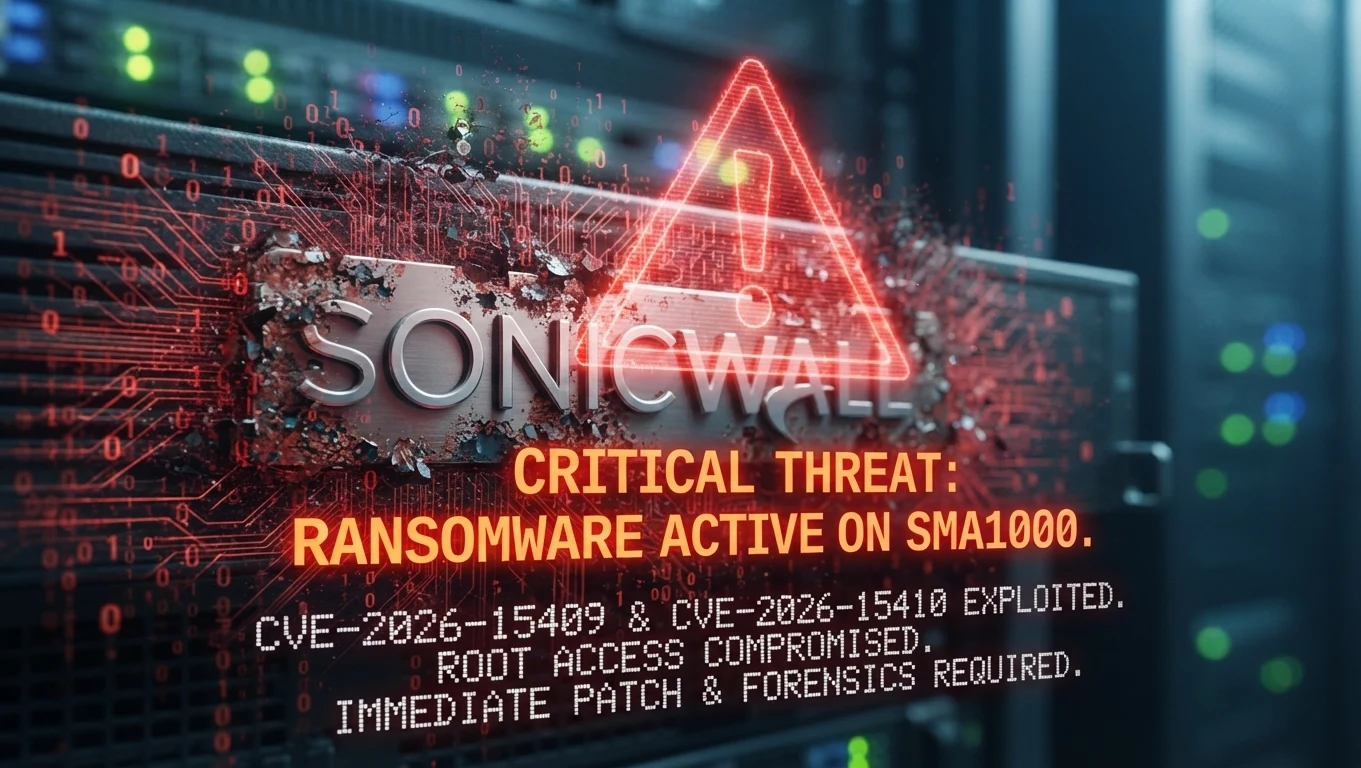
Urgent Security Alert: Active Exploitation of SonicWall SMA1000 Vulnerabilities Threatens Enterprise Infrastructures
Enterprise environments are facing significant security threats after the confirmation that ransomware operators are actively exploiting two high-severity zero-day vulnerabilities affecting SonicWall Secure Mobile Access (SMA) 1000 appliances.