
- Certifications
- Network Security
- Cybersecurity
Why CCNA, CCNP, AWS, Azure, and ISC2 Certifications Are Important for IT Professionals (Part 1)
By Pivithuru Milan Perera5 min read
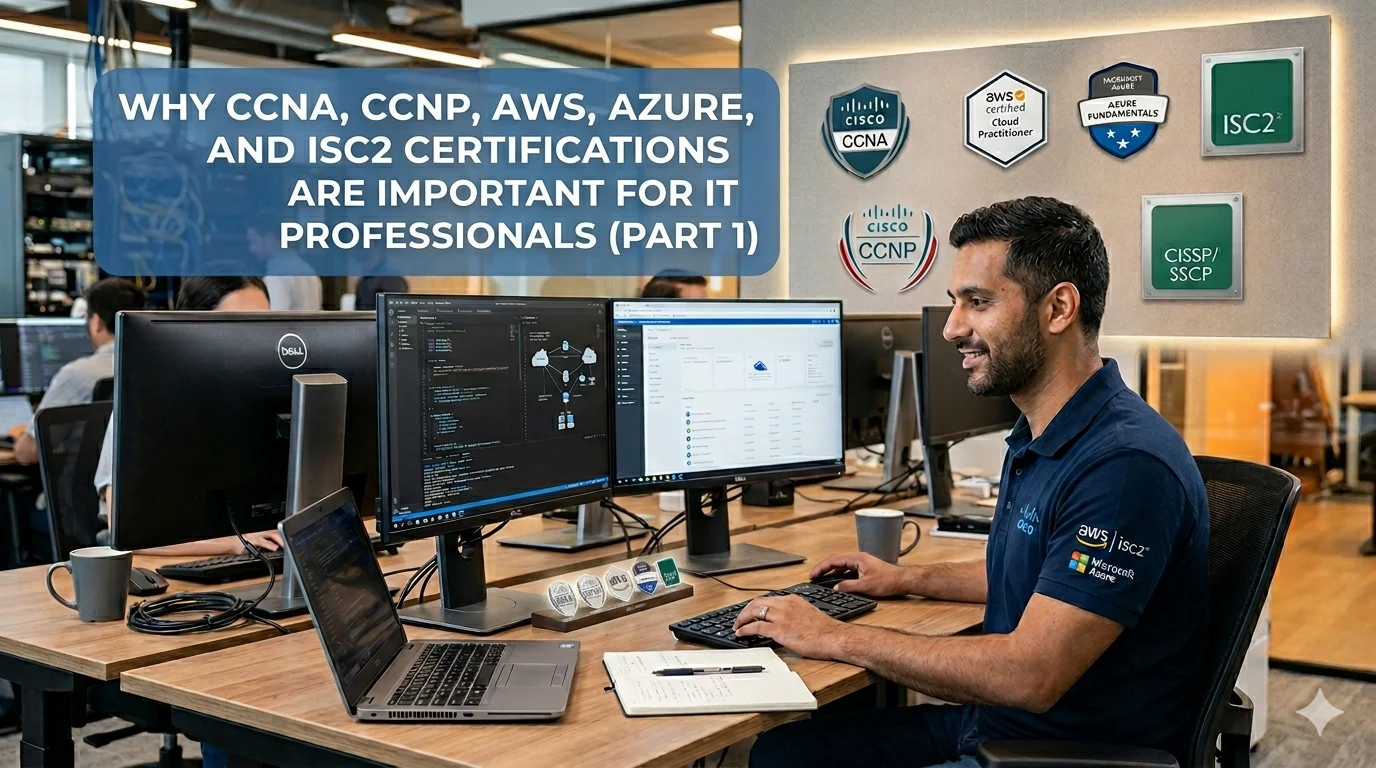
It's worth addressing the skeptical take first: with AI tools automating more technical work, do certifications still carry weight? The data says yes, and arguably more than before. Certifications exist precisely because they remove guesswork for hiring managers. A recruiter looking at two resumes for a cloud or network role has no fast way to verify how deep someone's actual skills go. a vendor-issued credential, backed by a defined passing standard and a recertification cycle, closes that gap instantly.
Industry salary research consistently finds that IT professionals holding a recognized certification earn meaningfully more than uncertified peers in the same role, with several surveys putting the premium in the 15-30% range depending on the specific credential and experience level. That premium tends to be largest early in a career, when you have little work history to lean on and a certification is the clearest signal you can offer.
CCNA: The Foundation Every Network Career Needs.
The Cisco Certified Network Associate (CCNA) remains the standard entry point into enterprise networking. It validates core skills in routing, switching, IP connectivity, security fundamentals, and increasingly, network automation.

On the money side, multiple 2026 salary trackers place average CCNA-holder pay somewhere in the $94,000–$113,000 range nationally, with entry-level network technician and help-desk-tier roles starting closer to $50,000–$70,000 and senior network engineers with automation skills clearing $140,000 or more. The spread is wide because CCNA opens the door to a job, but experience and specialization determine how far that job takes you.
Demand is the more interesting story. Cisco has publicly described a global shortfall of more than a million network professionals, and the U.S. Bureau of Labor Statistics projects roughly 6% growth in network-related roles through 2033 modest-sounding, but steady and durable, since virtually every organization on earth still runs physical or virtual network infrastructure that someone has to design, secure, and maintain. For a beginner, CCNA is less about chasing a huge paycheck on day one and more about buying a seat at the table in IT infrastructure.
CCNP: Where Mid-Level Engineers Become Senior Ones.
The Cisco Certified Network Professional (CCNP) is the credential that separates "I can support a network" from "I can design and run one." Cisco recommends three to five years of hands-on experience before attempting it, and the exam content (centered on the ENCOR core exam plus a concentration like Security, Enterprise, or Data Center) goes considerably deeper into automation, SD-WAN, and complex troubleshooting than CCNA does.
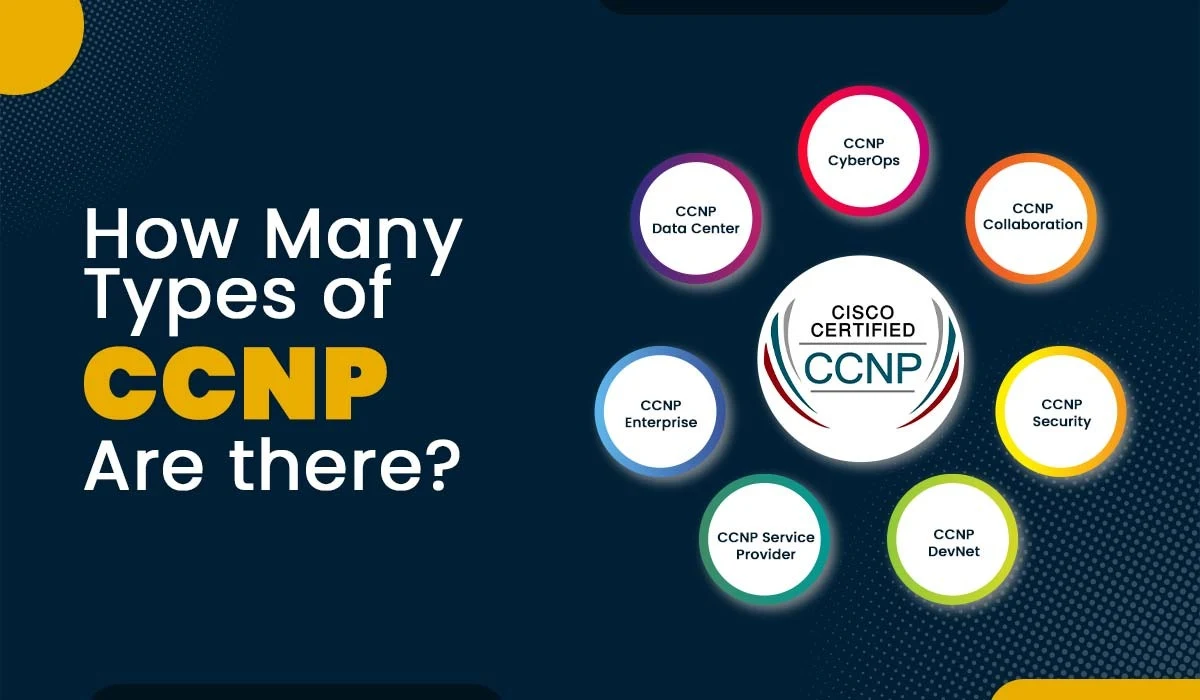
The practical takeaway: CCNP isn't a beginner certification, but it's worth knowing it exists as the next rung on the ladder, because it's what turns a CCNA into a long-term, high-ceiling networking career rather than a stepping stone job.
AWS Certifications: Cloud Skills That Travel Anywhere.
Amazon Web Services holds roughly 30-34% of the global cloud infrastructure market, more than any other provider, which is why AWS certifications are often the default recommendation for anyone entering cloud computing.
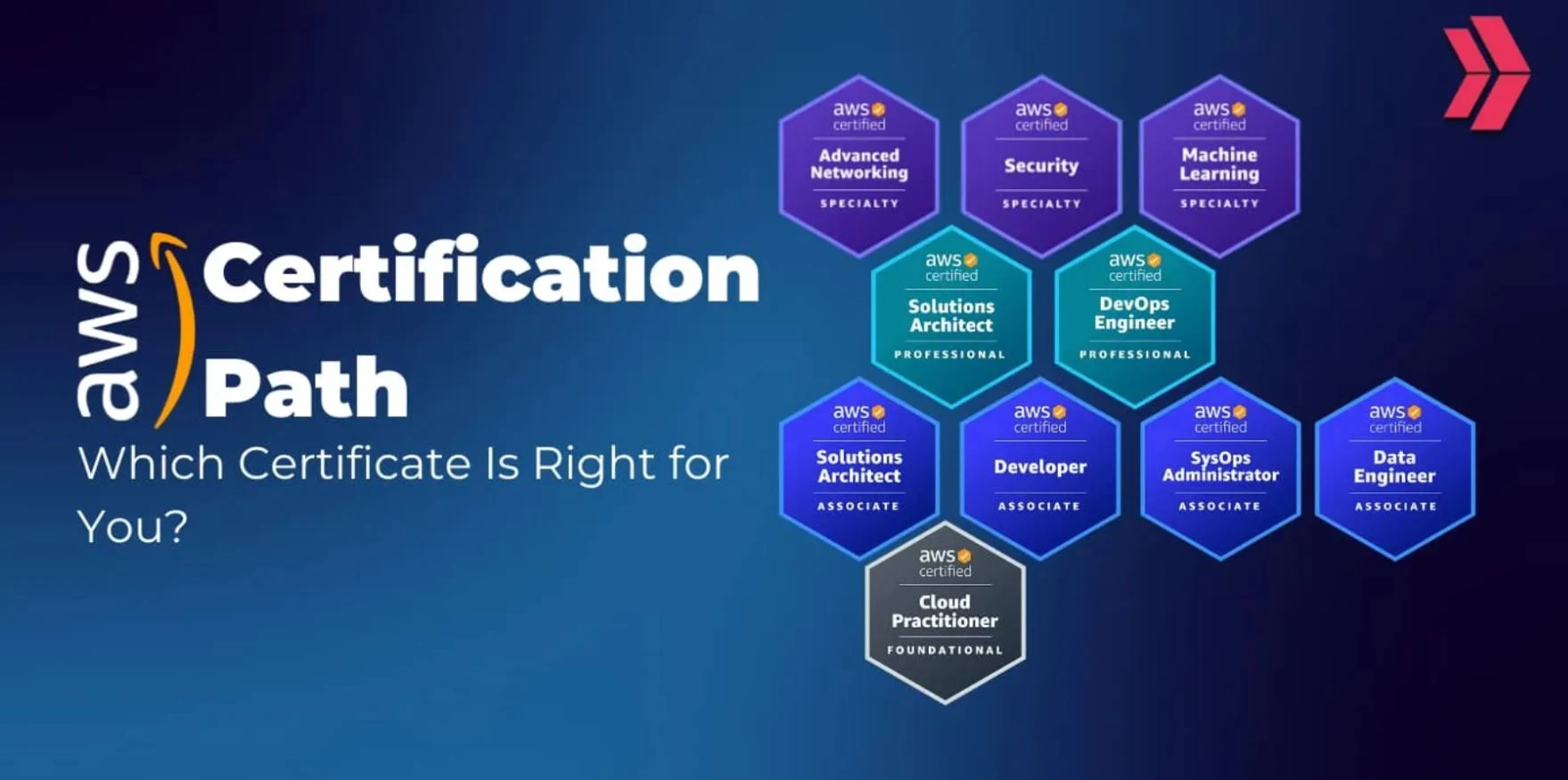
AWS structures its certifications in tiers. Cloud Practitioner is the foundational, non-technical entry point and tends to average $75,000–$95,000 for holders moving into junior cloud support roles. Solutions Architect Associate is the certification employers ask for most it shows up in the large majority of cloud job postings and pushes average pay toward $110,000–$130,000. At the top end, Solutions Architect Professional and specialty certifications in security or machine learning regularly land in the $150,000–$175,000+ range, with the highest-demand specialties (security and AI/ML) growing the fastest year over year.
Across the board, certified AWS professionals report earning roughly 25-27% more than non-certified peers in comparable roles, and the job volume backs that up: tens of thousands of active U.S. postings list AWS skills as a requirement at any given time. For beginners, AWS is the safer "default" choice if you want maximum job-market flexibility, especially in startups, SaaS companies, and cloud-native tech firms.
Azure Certifications: The Enterprise and Government Standard.
Microsoft Azure trails AWS in raw market share (commonly cited around 20-24%) but dominates in a specific and very large lane: large enterprises, government agencies, and any organization already running Microsoft 365, Active Directory, or Windows Server. Roughly 85% of Fortune 500 companies use Azure in some capacity, which keeps demand for Azure-certified professionals strong even where it isn't the market leader overall.
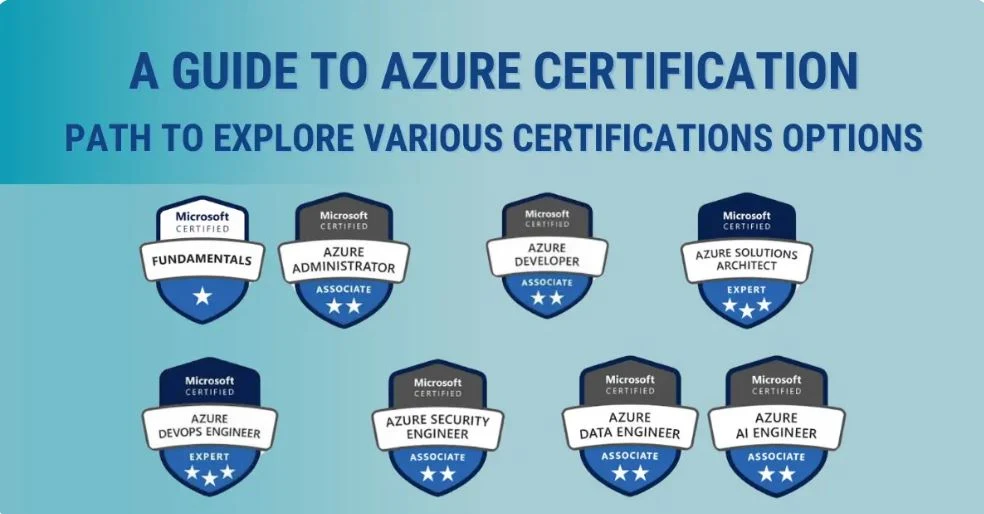
One pattern worth knowing: AWS-certified professionals still earn slightly more on average, but that gap has been shrinking, from roughly 8-12% a few years ago to closer to 2-4% in 2026. Meanwhile, Azure job postings have been growing faster year-over-year than AWS postings in several markets, particularly the U.S., U.K., and Canada. If your target employer or industry already runs on Microsoft infrastructure, Azure is very likely the higher-leverage choice, certification math aside.
ISC2 Certifications: Security Credentials in a Field That Can't Fill Its Own Jobs.
ISC2 (formerly (ISC)²) is the organization behind some of the most respected security certifications in the industry, and the demand backdrop here is the most dramatic of any category in this guide. ISC2's own Cybersecurity Workforce Study has reported a global shortage of roughly 4 to 4.8 million unfilled cybersecurity positions, a gap that has been widening rather than closing in recent years.
For beginners, ISC2's Certified in Cybersecurity (CC) is the accessible entry point. it requires no prior experience and is designed specifically to bring new people into the field. For administrators a step further along, the SSCP (Systems Security Certified Practitioner) validates hands-on operational security skills. The marquee credential, though, is CISSP (Certified Information Systems Security Professional), widely regarded as the gold-standard cybersecurity certification globally. CISSP typically requires five years of relevant work experience, but the payoff is substantial: certification-impact studies consistently show a $25,000–$35,000 average salary premium over non-certified peers, with ISC2's own data putting average total compensation for CISSP holders (including bonuses) at around $175,000.
There's also CCSP (Certified Cloud Security Professional), which ISC2 designed specifically for the overlap between cloud and security a combination cited by ISC2's workforce research as one of the most acute skill gaps in the industry, with more than a third of organizations naming cloud security a critical shortage area. If you already hold an AWS or Azure certification, CCSP is frequently recommended as the highest-leverage next step, since it monetizes the cloud knowledge you already have.
We will continue this discussion in the next part of this series.
Next up: Why CCNA, CCNP, AWS, Azure, and ISC2 Certifications Are Important for IT Professionals (Part 2)
Keep reading
More articles
Explore other writeups on network security, firewalls, and practical engineering.
what is wireshark and why it is used ? (Part 1)
Wireshark is a network protocol analyzer that allows us to capture and inspect network packets as they travel between devices. Instead of simply looking at whether a connection works or fails, Wireshark allows us to look inside the communication and understand what is happening at the packet level.
Reflecting on My BSc (Hons) in Information Technology Specializing in Computer Systems & Network Engineering at SLIIT (2021–2025)
When I look back at my journey starting from July 2021 all the way to completing my final requirements, enrolling in the BSc (Hons) in Information Technology specializing in Computer Systems and Network Engineering (CSNE) at the Sri Lanka Institute of Information Technology (SLIIT) was one of the most defining choices of my professional life.

The Hidden Vulnerabilities of Public Wi-Fi: Why Open Networks Are a Trap
Ever logged onto a coffee shop's "free" Wi-Fi and did your office work while enjoying a good cup of coffee freely and happily, did you feel completely safe on free Wi-Fi? Think again. Behind that open connection lies a silent playground for hackers where passwords don't even need to be cracked, because your active sessions are stolen in plain sight. Discover why multi-factor authentication isn't enough and what you can do right now to protect your data before your next public login. Read the full post to uncover the hidden traps of unsecured networks!
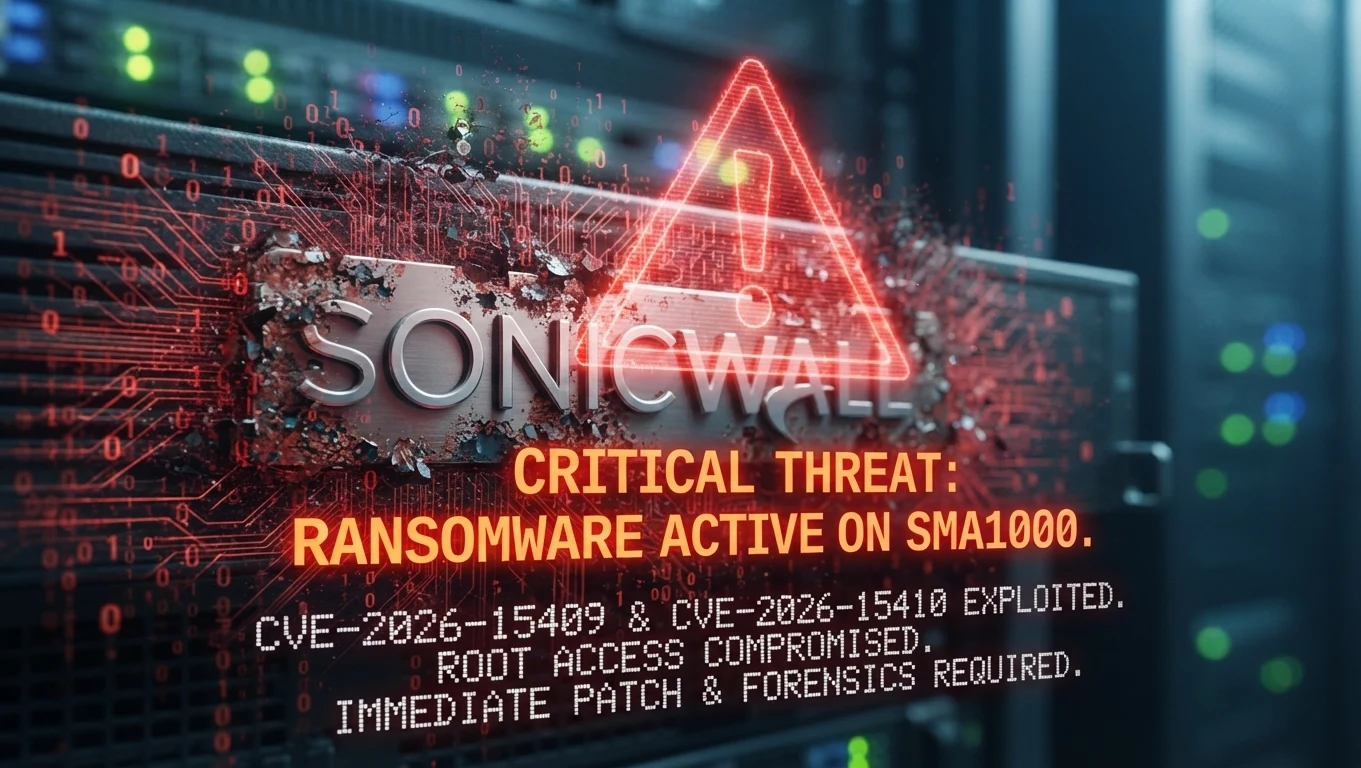
Urgent Security Alert: Active Exploitation of SonicWall SMA1000 Vulnerabilities Threatens Enterprise Infrastructures
Enterprise environments are facing significant security threats after the confirmation that ransomware operators are actively exploiting two high-severity zero-day vulnerabilities affecting SonicWall Secure Mobile Access (SMA) 1000 appliances.