
- Network Fundamentals
- NGFW & Firewalls
- Cybersecurity
Why You Can’t Build a Secure Network on a Shaky Foundation
By Pivithuru Milan Perera5 min read

1. The Blueprint: Establishing Clear Cybersecurity PoliciesFar too often, network security is implemented in a reactive, haphazard way because there isn’t a clear playbook. You cannot secure what you haven't defined.A documented cybersecurity policy isn’t just bureaucratic paperwork; it is the blueprint for your entire infrastructure. It defines how passwords are handled, who gets access to what, how sensitive data is isolated, and exactly what happens when an incident occurs. Without strictly enforced policies, IT teams of organizations are left guessing and that is a vulnerability bad actors love to exploit.
2. The Human Element: Passwords and Password Management
We often say that the human elements are the weakest link in network security, but that isn't a criticism of your team, it’s just the reality. Software obeys strict logics but humans look for efficiency and easiness, this often leads to weak passwords or reused passwords across multiple platforms.
As I see the answer for this is: insisting on unique, complex passwords for every single system, and providing the tools to make that possible. Implementing an enterprise-grade, encrypted password manager removes the burden from the user while drastically shrinking the organization's credential-stuffing attack surface.
3. The Front Gate: Multi-Factor Authentication (MFA)
Statistically, compromised credentials are the easiest way into a network. That is why Multi-Factor Authentication (MFA) is no longer optional; it is standard

But we need to take this a step further by tying MFA directly to a Zero Trust Network Access (ZTNA) framework. The concept is simple: never trust, always verify. No user or device should be trusted implicitly just because they are inside the network perimeter or have the right password.
4. Containing the Threat: Role-Based Access Control (RBAC)
Once a user is authenticated, where can they go? This is where Role-Based Access Control (RBAC) becomes critical. RBAC ensures that employees only have access to the specific data and applications required to do their jobs. A marketing coordinator doesn't need access to finance servers, and an engineer doesn't need access to HR records.
From a defense perspective, RBAC is your primary tool for preventing lateral movement. If a hacker manages to compromise a low-level user’s credentials, RBAC ensures they are trapped in a small, isolated section of the network, rather than gaining the keys to the entire kingdom.
5. The Shield: Hardware Defenses and Patch Management
Finally, you have to back up your policies with the right infrastructure. This means deploying robust hardware like Next-Generation Firewalls (NGFWs) to

However, even the best hardware and software are only as good as their latest update. Creative attackers are constantly probing for software vulnerabilities. A rigorous, non-negotiable patch management schedule is the only way to close those doors before someone kicks them open.
The Takeaway
If these five principles sound basic, it’s because they are. But there is a massive difference between knowing the basics and mastering them.
Before we look to the horizon at the next big trend in cybersecurity, let’s make sure the foundation beneath our feet is solid. If you get these five fundamentals right, everything you build on top of them will be infinitely more secure.
Keep reading
More articles
Explore other writeups on network security, firewalls, and practical engineering.

Reflecting on My BSc (Hons) in Information Technology Specializing in Computer Systems & Network Engineering at SLIIT (2021–2025)
When I look back at my journey starting from July 2021 all the way to completing my final requirements, enrolling in the BSc (Hons) in Information Technology specializing in Computer Systems and Network Engineering (CSNE) at the Sri Lanka Institute of Information Technology (SLIIT) was one of the most defining choices of my professional life.
The Hidden Vulnerabilities of Public Wi-Fi: Why Open Networks Are a Trap
Ever logged onto a coffee shop's "free" Wi-Fi and did your office work while enjoying a good cup of coffee freely and happily, did you feel completely safe on free Wi-Fi? Think again. Behind that open connection lies a silent playground for hackers where passwords don't even need to be cracked, because your active sessions are stolen in plain sight. Discover why multi-factor authentication isn't enough and what you can do right now to protect your data before your next public login. Read the full post to uncover the hidden traps of unsecured networks!

Urgent Security Alert: Active Exploitation of SonicWall SMA1000 Vulnerabilities Threatens Enterprise Infrastructures
Enterprise environments are facing significant security threats after the confirmation that ransomware operators are actively exploiting two high-severity zero-day vulnerabilities affecting SonicWall Secure Mobile Access (SMA) 1000 appliances.
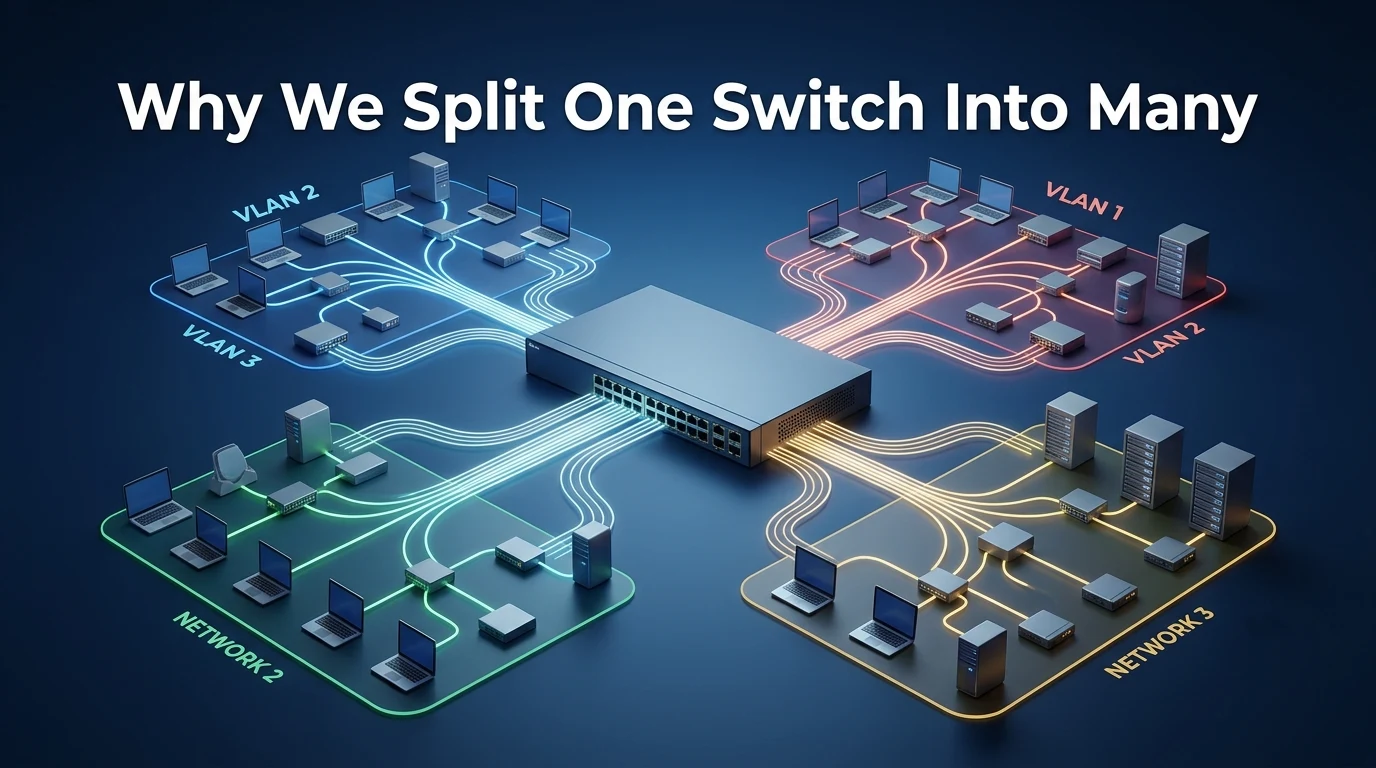
VLAN Basics: Why We Split One Switch Into Many
Tags, ports, PVIDs, and trunks explained from the ground up, starting with the problem VLANs actually solve