
- Sales Engineering
- Network Security
Navigating the Tech Landscape by Understanding the Gartner Magic Quadrant
By Pivithuru Milan Perera5 min read
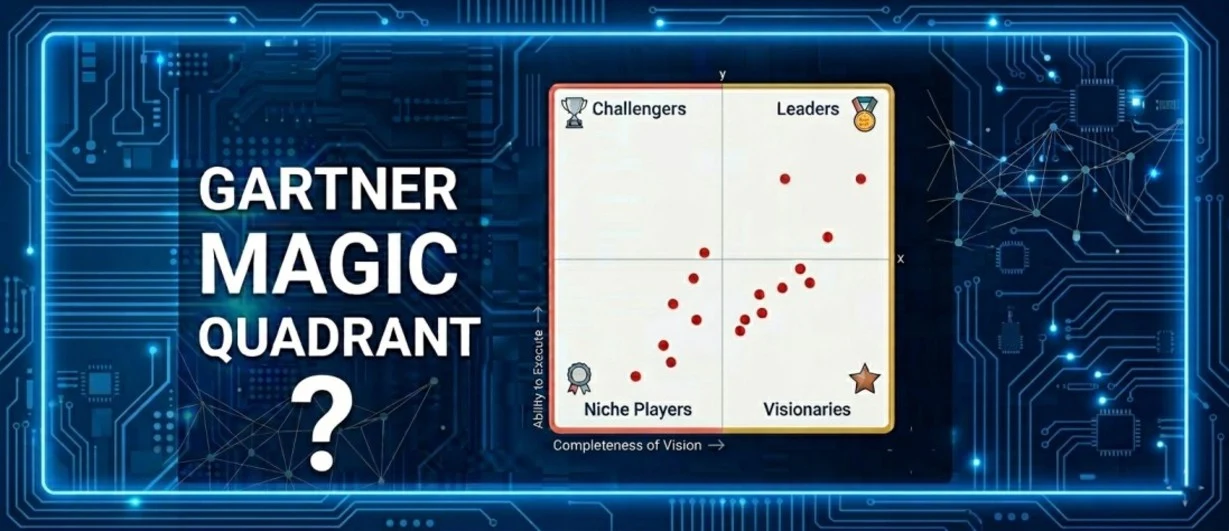
When your business is preparing to make a major technology investment, the stakes are high. Choosing the wrong software platform or vendor can result in wasted budget, frustrated teams, and missed strategic goals. To mitigate these risks, enterprises worldwide rely on a trusted compass: the Gartner Magic Quadrant.
But what exactly is this matrix, how do you read it, and why should it matter to your next big technology decision? Let’s break it down.
What is the Gartner Magic Quadrant?
Founded in 1979 by Gideon Gartner, Gartner, Inc. has grown into one of the world's leading research and advisory firms. While they are famous for various frameworks, like the "Hype Cycle". their most famous visual reporting tool is the Magic Quadrant.
At its core, a Magic Quadrant is a data-driven matrix that evaluates technology providers within a specific market. It doesn't just look at who is making the most money today; it evaluates where those companies are headed tomorrow.
The matrix is built on a simple graph featuring two primary axes:
- The X-Axis (Horizontal): Completeness of Vision - This measures a vendor's innovation, product direction, and market understanding. It answers the question: Does this company understand where the industry is going?
- The Y-Axis (Vertical): Ability to Execute - This measures the vendor's financial viability, customer experience, marketing execution, and the actual quality of their products. It answers the question: Can this company deliver on its promises?
The Four Quadrants Explained
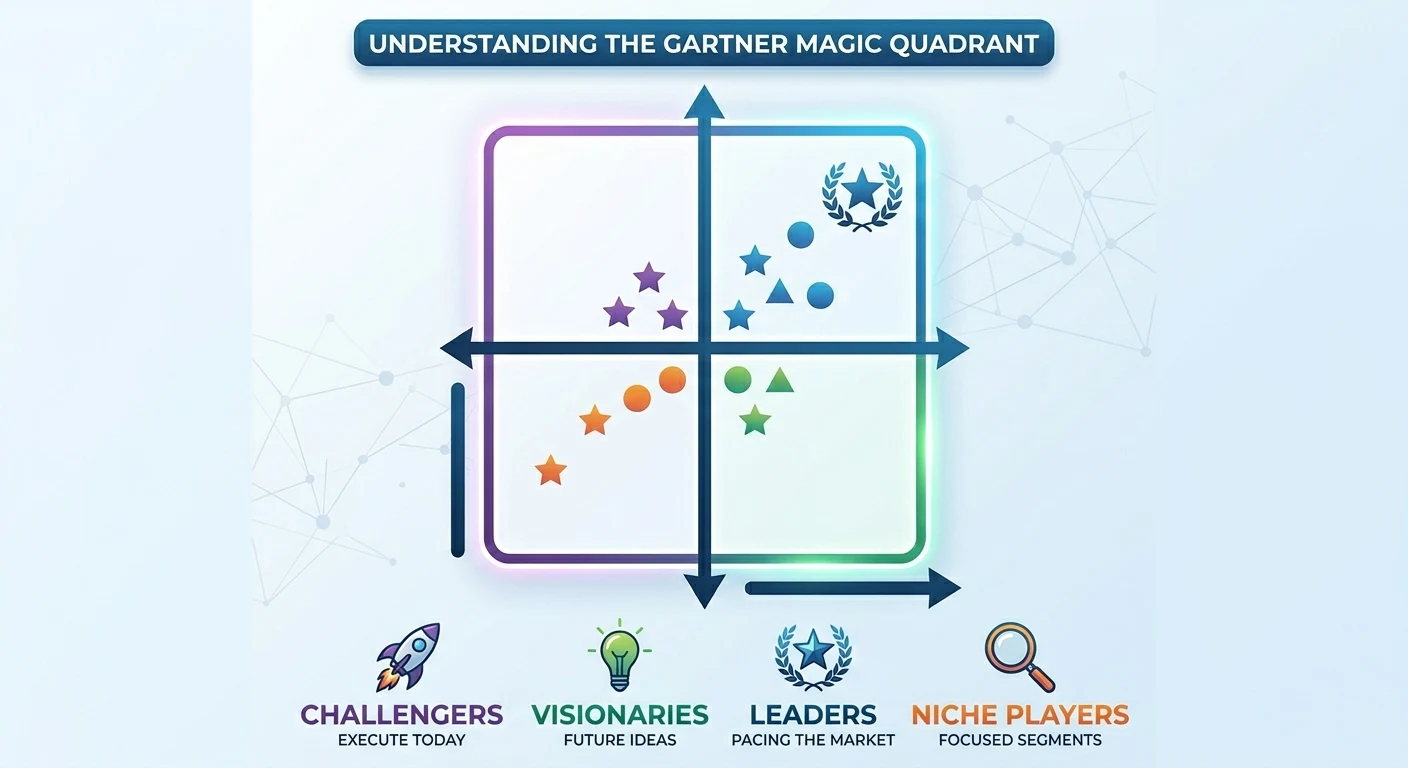
By intersecting these two axes, Gartner divides the market landscape into four distinct quarters. Each quadrant tells a different story about a vendor's market position.
1. Leaders (Top Right)
Leaders possess both a highly developed execution capability and a clear, forward-thinking vision. These companies are the industry pace-setters, driving innovation and frequently dictating emerging trends. They are built for success both today and tomorrow.
2. Challengers (Top Left)
Challengers are operational powerhouses. They execute incredibly well, have strong current market presence, and reliably serve their customers today. However, they typically lag in "Completeness of Vision," meaning they might be slower to innovate or are dominating segments with products nearing the end of their lifecycle.
3. Visionaries (Bottom Right)
Visionaries understand where the market is going and frequently introduce highly innovative, creative concepts. However, they are often restricted by a limited "Ability to Execute", perhaps due to their size, financial backing, or operational scale.
4. Niche Players (Bottom Left)
Niche Players focus sharply on a specific, narrow segment of the market. While they might perform exceptionally well within their specific sandbox, they lack the broad capabilities, financial scaling, or sweeping market influence of their competitors.
---------------------------------------------------------------------------------------------------------------------------------------
My Personal Perspective
Don't fall into the trap of only looking at the "Leaders" quadrant. Depending on your unique budget, industry vertical, and project scope, a Niche Player or a Visionary might actually be the most efficient and tailored fit for your specific business goals.
Gartner’s rigorous evaluation methodology which combines quantitative data collection, expert analyst judgment, and strict peer reviews, ensures their insights remain highly objective. Leveraging these reports provides your business with several distinct competitive advantages.
- Trend Identification: Spot emerging technologies before your competitors do.
- Risk Mitigation: Evaluate the financial viability and long-term stability of a vendor before signing a contract.
- Competitive Analysis: Compare vendor strengths and weaknesses side-by-side using unbiased, standardized criteria.
- Smart Technology Adoption: Seamlessly evaluate complex software ecosystems, such as enterprise Network and cybersecurity solutions.
By understanding how to balance a vendor's Completeness of Vision against their Ability to Execute, you can move past the surface-level features and evaluate how a platform will truly support your business operations over the long haul. Remember, the "best" platform isn't automatically the one sitting in the top-right corner of the Leaders quadrant; it’s the one that aligns most accurately with your specific budget, technical requirements, and long-term strategic goals.
When you use these insights to guide your evaluation process, you mitigate the risks of major software investments and set your business up for sustainable, scalable success.
check for Gartner peer insights For real-world validation, you can even cross-reference these reports with verified customer reviews on Gartner Peer Insights to see how platforms perform in actual deployment.
Keep reading
More articles
Explore other writeups on network security, firewalls, and practical engineering.

Reflecting on My BSc (Hons) in Information Technology Specializing in Computer Systems & Network Engineering at SLIIT (2021–2025)
When I look back at my journey starting from July 2021 all the way to completing my final requirements, enrolling in the BSc (Hons) in Information Technology specializing in Computer Systems and Network Engineering (CSNE) at the Sri Lanka Institute of Information Technology (SLIIT) was one of the most defining choices of my professional life.

The Hidden Vulnerabilities of Public Wi-Fi: Why Open Networks Are a Trap
Ever logged onto a coffee shop's "free" Wi-Fi and did your office work while enjoying a good cup of coffee freely and happily, did you feel completely safe on free Wi-Fi? Think again. Behind that open connection lies a silent playground for hackers where passwords don't even need to be cracked, because your active sessions are stolen in plain sight. Discover why multi-factor authentication isn't enough and what you can do right now to protect your data before your next public login. Read the full post to uncover the hidden traps of unsecured networks!
Urgent Security Alert: Active Exploitation of SonicWall SMA1000 Vulnerabilities Threatens Enterprise Infrastructures
Enterprise environments are facing significant security threats after the confirmation that ransomware operators are actively exploiting two high-severity zero-day vulnerabilities affecting SonicWall Secure Mobile Access (SMA) 1000 appliances.
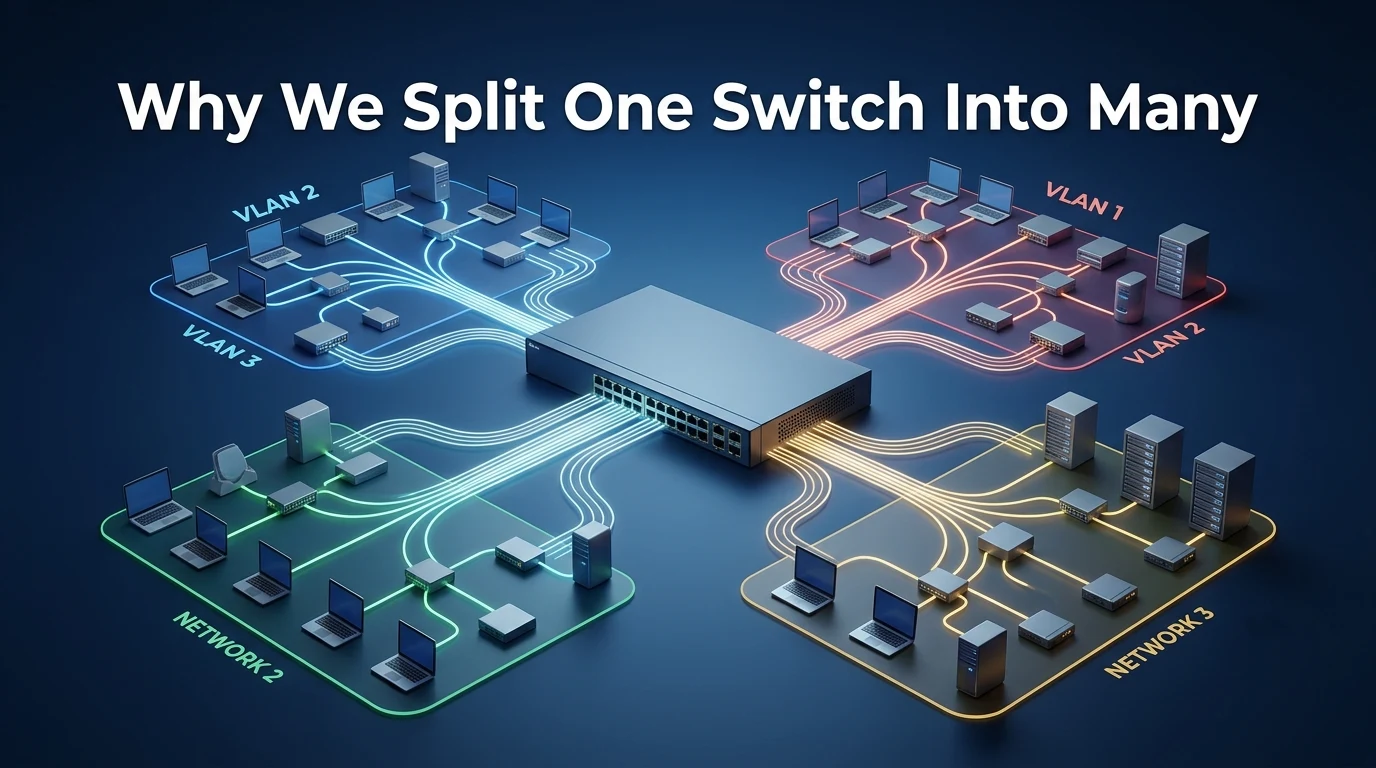
VLAN Basics: Why We Split One Switch Into Many
Tags, ports, PVIDs, and trunks explained from the ground up, starting with the problem VLANs actually solve