
- Vulnerability
- VPN
- Check Point
- Network Security
Threat Advisory: Deconstructing CVE-2026-50751 and the Architectural Risks of Legacy VPN Protocols
By Pivithuru Milan Perera5 min read
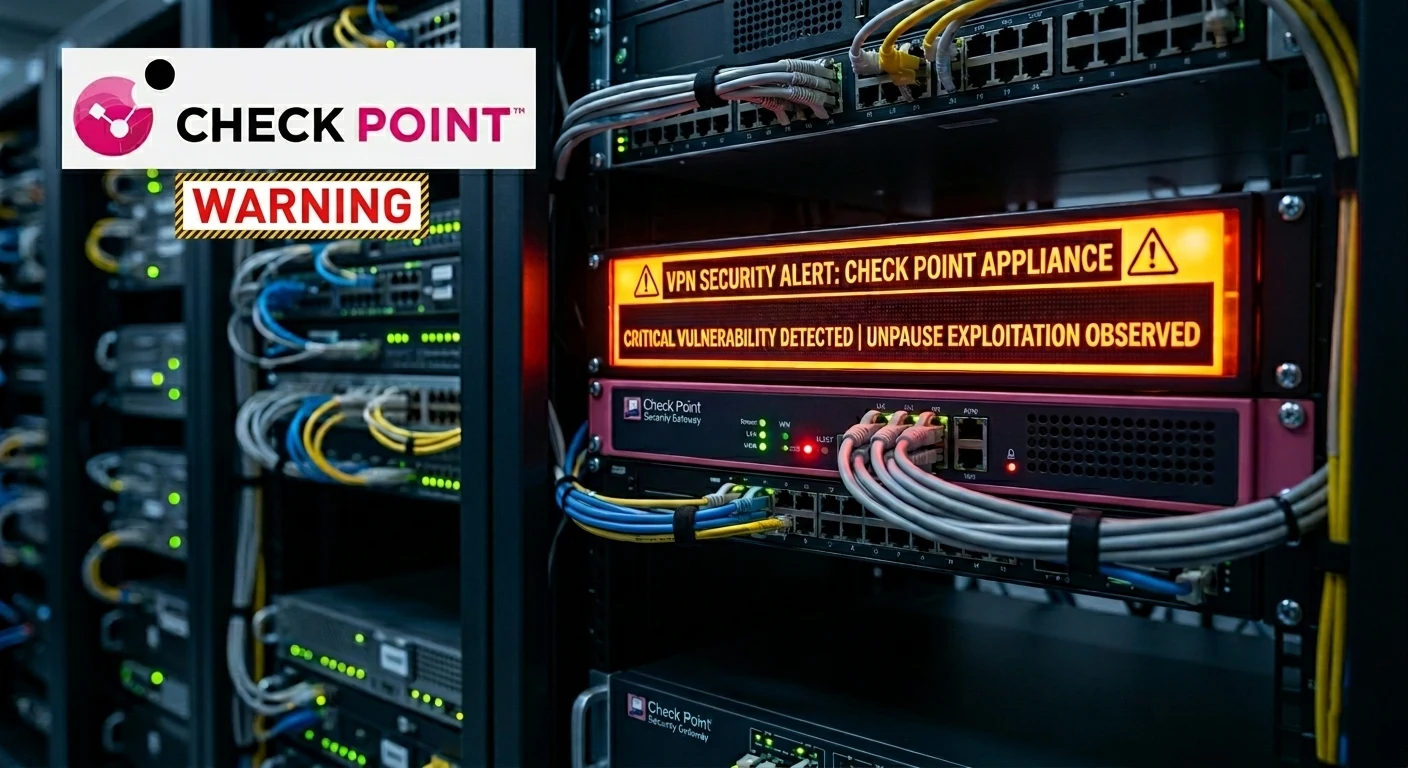
The perimeter defense landscape just received a stark reminder of why technical debt is one of the greatest security liabilities an enterprise can carry. Check Point recently disclosed a critical authentication bypass vulnerability, tracked as CVE-2026-50751, which boasts a near-maximum CVSS severity score of 9.3.
More concerning than the score itself is the operational reality: this flaw is under active, real-world exploitation, with forensic evidence tracing malicious activity back to early May 2026. Security teams have already observed post-exploitation footprints linked to Qilin ransomware affiliates utilizing this vector for initial perimeter access.
As security and network engineers, we must look beyond the immediate patch and analyze why this vulnerability exists, how it functions, and what it teaches us about modern edge architecture.
The Anatomy of the Flaw: Logic Failures & Deprecated Protocols
The root cause of CVE-2026-50751 lies at the intersection of a software logic flaw and legacy configuration retention. Specifically, the vulnerability stems from a logic error in how the gateway validates security certificates during the authentication phase of a remote access VPN session.
By manipulating the certificate validation exchange, an unauthenticated remote attacker can trick the gateway into establishing a valid Mobile Access or Remote Access session completely bypassing the requirement for user passwords.
However, an attacker cannot just target any gateway. The exploit strictly relies on a specific set of legacy environmental conditions:
- The use of IKEv1 (Internet Key Exchange version 1): A protocol long considered outdated.
- Legacy Client Support: The gateway must be configured to allow connections from older, legacy remote access clients.
- Absence of Machine Certificates: The organization is allowing VPN access based only on user credentials and not requiring the device to prove its identity.
Affected Infrastructures
Check Point has confirmed that the vulnerability spans multiple enterprise software versions and hardware lines.
- Mobile Access / SSL VPN, Remote Access VPN, Spark Firewall - R80.20.X (EOS), R80.40 (EOS), R81 (EOS), R81.10 (EOS), R81.10.X, R81.20, R82, R82.00.X, R82.10
- Security Gateways, Spark Firewall - R80.20.X (EOS), R80.40 (EOS), R81 (EOS), R81.10 (EOS), R81.10.X, R81.20, R82, R82.00.X, R82.10
Hardening the Edge Against Protocol Rot
To secure the modern enterprise edge, our engineering roadmap must transition away from legacy assumptions.
- Immediate Patch Management & Forensic Auditing - The first priority is applying the vendor's latest Jumbo Hotfix takes to all active security gateways. Concurrently, security teams should actively audit VPN logs looking back to early May 2026 for unusual authentication patterns.
- Deprecate IKEv1 and Force IKEv2 Migration - There is no longer a valid architectural justification for running IKEv1 on a modern corporate perimeter. Migrating fully to IKEv2 or modern TLS-based architectures will significantly increase more resilient cryptographic handling.
- Enforce Machine-Level Authentication - Relying strictly on user credentials or weak certificate checks leaves a single point of failure. Implementing mandatory machine certificate validation ensures that even if an authentication logic flaw exists, a connection attempt from a non-corporate, non-enrolled device is dropped at the very beginning of the handshake.
Perimeter appliances like firewalls and VPN gateways will always be prime targets because they sit at the exact boundary between the wild internet and protected corporate assets. The lesson of CVE-2026-50751 is clear: keeping the perimeter safe isn’t just about applying patches reactively, it’s about actively decommissioning legacy protocols before threat actors turn them against us.
check the link for more information -https://blog.checkpoint.com/security/check-point-releases-important-hotfix-for-vulnerabilities-in-deprecated-ikev1-vpn-protocol/
Keep reading
More articles
Explore other writeups on network security, firewalls, and practical engineering.
what is wireshark and why it is used ? (Part 1)
Wireshark is a network protocol analyzer that allows us to capture and inspect network packets as they travel between devices. Instead of simply looking at whether a connection works or fails, Wireshark allows us to look inside the communication and understand what is happening at the packet level.

Reflecting on My BSc (Hons) in Information Technology Specializing in Computer Systems & Network Engineering at SLIIT (2021–2025)
When I look back at my journey starting from July 2021 all the way to completing my final requirements, enrolling in the BSc (Hons) in Information Technology specializing in Computer Systems and Network Engineering (CSNE) at the Sri Lanka Institute of Information Technology (SLIIT) was one of the most defining choices of my professional life.
The Hidden Vulnerabilities of Public Wi-Fi: Why Open Networks Are a Trap
Ever logged onto a coffee shop's "free" Wi-Fi and did your office work while enjoying a good cup of coffee freely and happily, did you feel completely safe on free Wi-Fi? Think again. Behind that open connection lies a silent playground for hackers where passwords don't even need to be cracked, because your active sessions are stolen in plain sight. Discover why multi-factor authentication isn't enough and what you can do right now to protect your data before your next public login. Read the full post to uncover the hidden traps of unsecured networks!
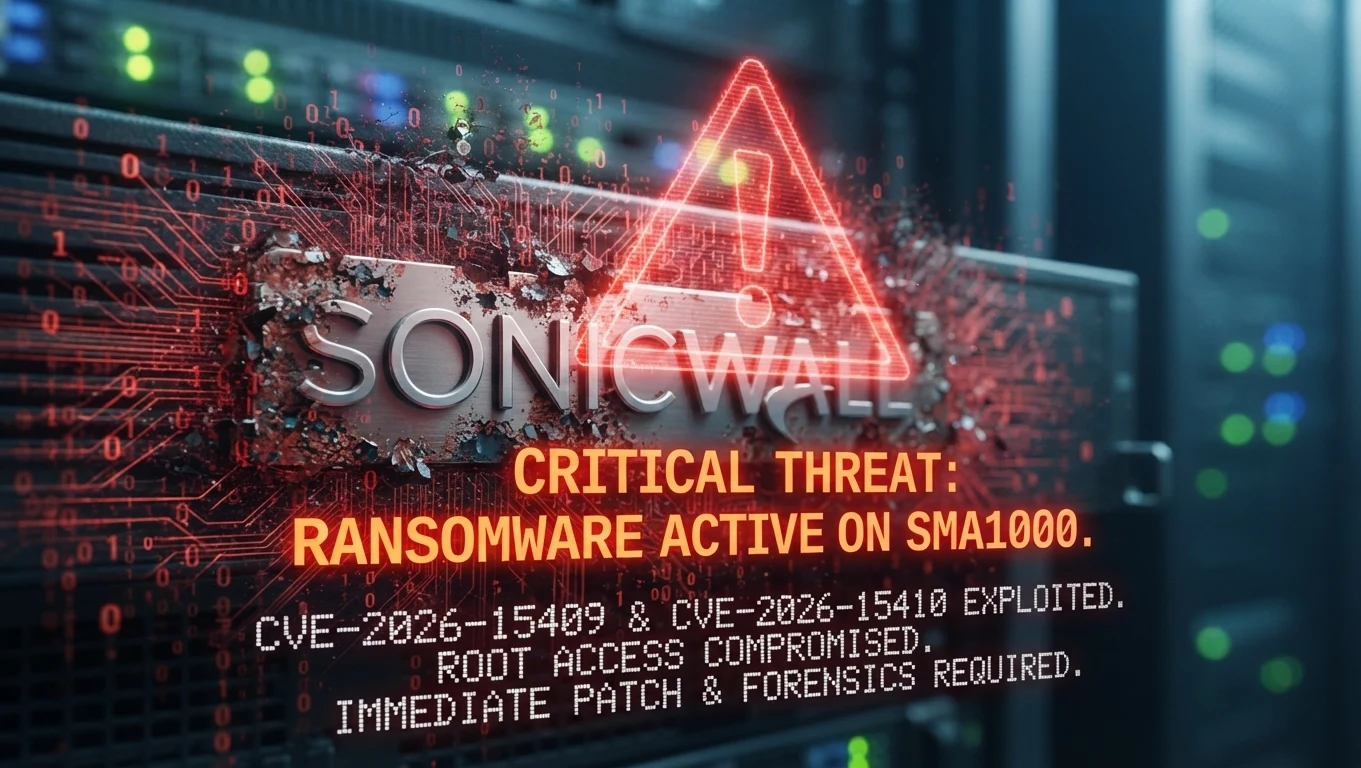
Urgent Security Alert: Active Exploitation of SonicWall SMA1000 Vulnerabilities Threatens Enterprise Infrastructures
Enterprise environments are facing significant security threats after the confirmation that ransomware operators are actively exploiting two high-severity zero-day vulnerabilities affecting SonicWall Secure Mobile Access (SMA) 1000 appliances.